Detecting What Others Miss: A Comparative Performance Evaluation of Flip Mycoplasma against Four Commercial Mycoplasma Tests
TECHNICAL WHITEPAPER
Detecting what others miss: a comparative performance evaluation of Flip Mycoplasma against four commercial mycoplasma tests
A comparative limit-of-detection study of Flip Mycoplasma (Fuse Diagnostics) against four other commercially available molecular mycoplasma detection kits.
Executive Summary
Undetected mycoplasma contamination is one of the most common and costly problems in cell culture. Surveys have found 15–35% of continuous cell lines to be infected [Drexler & Uphoff, 2002], and mycoplasma sequences have been detected in around 11% of cell lines deposited in public RNA-sequencing archives, many of them used to generate published data [Olarerin-George & Hogenesch, 2015]. Because it produces no turbidity, no pH shift and nothing visible under standard microscopy, mycoplasma contamination can quietly distort experimental results for a long time before it is suspected. The value of a screening test therefore depends on two things working together. It must detect very low levels of contamination, and it must be easy and quick and simple enough to be run often. This whitepaper reports a controlled, head-to-head evaluation of Flip Mycoplasma (Fuse Diagnostics) against four other commercially available molecular tests for Mycoplasma contamination. Three are PCR-based detection kits, referred to here as PCR Kits A, B and C, and the fourth is an isothermal amplification test with a separate lateral-flow strip readout, referred to here as the isothermal/lateral-flow test.
Sensitivity was assessed in three ways: limit of detection (LoD) against two independently quantified Mycoplasma standards, M. hominis (ATCC) and M. hyorhinis (Microbiologics); and detection of a confirmed-positive cell culture supernatant. Across all three, Flip Mycoplasma was the most sensitive test by a substantial margin, reaching 1 CFU per mL against M. hominis (104-fold to 107-fold lower than the other tests), 10–99 CFU per mL against M. hyorhinis (10-fold to 103-fold lower), and detecting contamination in a 1-in-100,000 dilution of a positive supernatant (103-fold to 105-fold lower).
This sensitivity advantage is decisive for catching low-level contaminations, such as slow-growing species or cultures sampled at low confluence, that other tests can miss entirely. Remarkably, this is achieved despite each Flip Mycoplasma test taking under 15 minutes to perform, against 2–4 hours for the PCR tests and over 1 hour for the isothermal/lateral-flow test, and the result is read on a simple visual test strip rather than by agarose-gel analysis.
The key results are summarised below and detailed, with full data, in the sections that follow.
Key Findings
| Evaluation | Flip Mycoplasma result |
|---|---|
| LoD vs M. hominis (ATCC) | 1 CFU/mL — 104 to 107-fold more sensitive |
| LoD vs M. hyorhinis (Microbiologics) | 10–99 CFU/mL — 10 to 103-fold more sensitive |
| Positive cell culture supernatant | Detected at 1-in-100,000 — 103 to 105-fold more sensitive |
Limit of Detection with Quantified Standards
A limit of detection (LoD) study was performed using two independently quantified standards: Mycoplasma hominis Strain LBD-4 (ATCC® 27545-TTRTM; Lot 70064945), produced and quantified by ATCC, and Mycoplasma hyorhinis (NCTC 10130; Cat 01178ME4; Lot 1178-20), produced and quantified by Microbiologics Inc. A 10-fold dilution series of each standard was prepared by diluting the manufacturer-provided stock in fresh DMEM. Samples were tested in triplicate, with each test performed according to the manufacturer's instructions, to identify the lowest concentration at which all (3/3) replicates were positive. A single set of samples was used across every test to ensure a like-for-like comparison.
Against M. hominis (Table 1), Flip Mycoplasma was the most sensitive test by a wide margin, reaching an LoD of 1 CFU per mL of cell culture supernatant, 104-fold to 107-fold lower than every other test evaluated.
Table 1 — Mycoplasma hominis (ATCC 27545)
| Target Conc. CFU/mLa | Target Conc. Genome copies/mLb | PCR Kit A | PCR Kit B | PCR Kit C | Isothermal LF test | Flip Mycoplasma (Fuse Diagnostics) |
|---|---|---|---|---|---|---|
| 10,000,000 | 32,400,000 | 100% (3/3) | - | - | - | - |
| 1,000,000 | 3,240,000 | 0% (0/6) | 100% (3/3) | 100% (3/3) | 100% (3/3) | 100% (3/3) |
| 100,000 | 324,000 | 0% (0/3) | 0% (0/3) | 100% (3/3) | 100% (3/3) | 100% (3/3) |
| 10,000 | 32,400 | - | - | 0% (0/3) | 100% (3/3) | 100% (3/3) |
| 1,000 | 3,240 | - | - | - | 0% (3/3) | 100% (3/3) |
| 100 | 324 | - | - | - | - | 100% (3/3) |
| 10 | 32.4 | - | - | - | - | 100% (3/3) |
| 1.0 | 3.24 | - | - | - | - | 100% (3/3) |
| 0.1 | 0.324 | - | - | - | - | 0% (0/3) |
a Based on a pre-preservation titre of 1.35 × 10⁹ CFU/mL, determined by serial dilution and plating on agar (post-preservation titre 1.06 × 10⁹ CFU/mL). b Determined by PicoGreen® assay.
Against M. hyorhinis (Table 2), Flip Mycoplasma was again the most sensitive test, with an LoD of 10–99 CFU per mL of cell culture supernatant, 10-fold to 103-fold lower than the other tests.
Table 2 — Mycoplasma hyorhinis (NCTC 10130)
| Target Conc. CFU/mL | Target Conc. Genome copies/mL | PCR Kit A | PCR Kit B | PCR Kit C | Isothermal LF test | Flip Mycoplasma (Fuse Diagnostics) |
|---|---|---|---|---|---|---|
| 10,000 – 99,000 | 21,200 | 100% (3/3) | 100% (3/3) | - | 100% (3/3) | - |
| 1,000 – 9,900 | 2,120 | 100% (3/3) | 100% (3/3) | 100% (3/3) | 0% (3/3) | 100% (3/3) |
| 100 – 990 | 212 | 0% (3/3) | 0% (3/3) | 100% (3/3) | - | 100% (3/3) |
| 10 – 99 | 21.2 | - | - | 0% (0/3) | - | 100% (3/3) |
| 1.0 – 9.9 | 2.12 | - | - | - | - | 67% (2/3) |
Limit of Detection with a Cell Culture Supernatant Sample
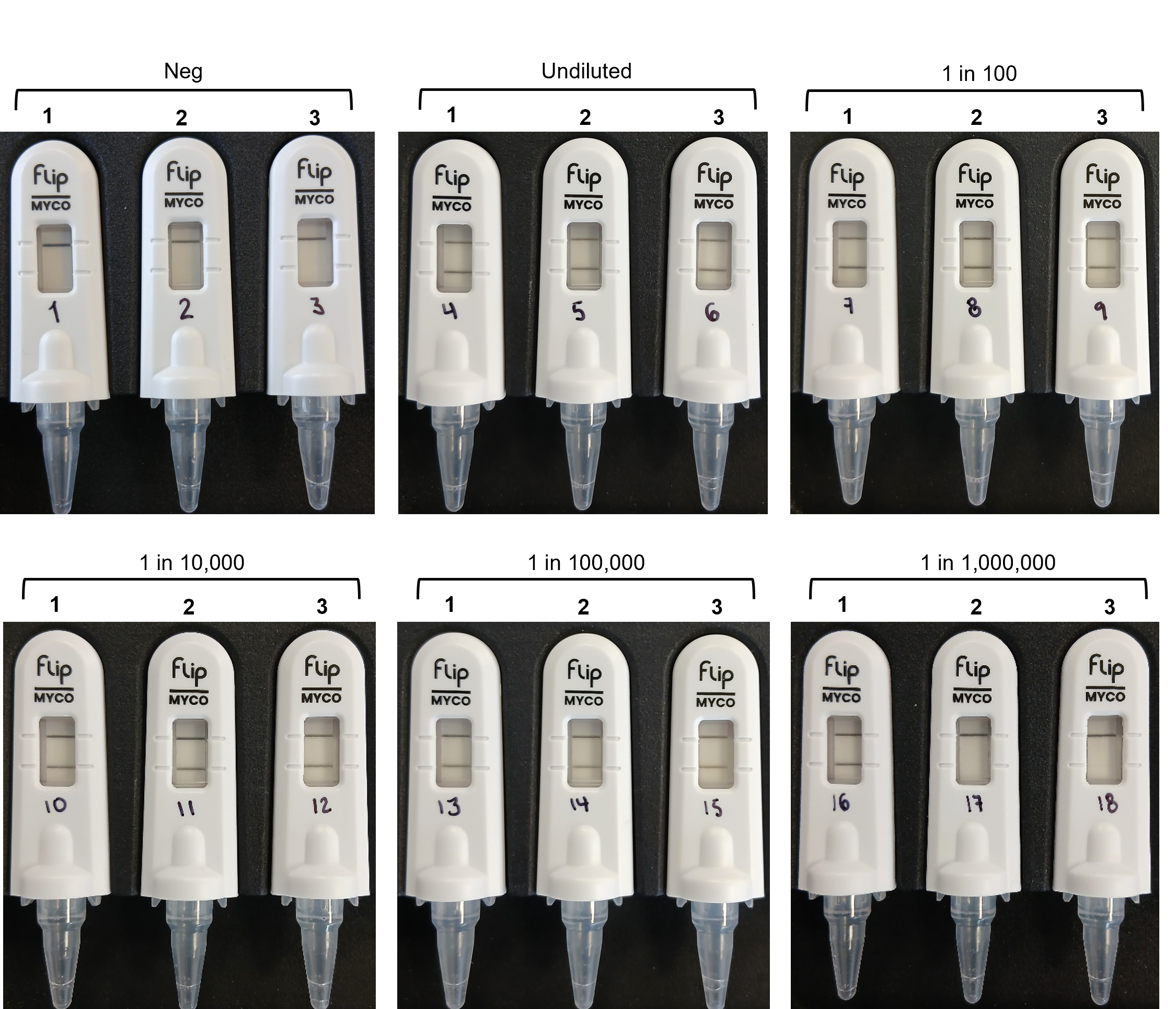
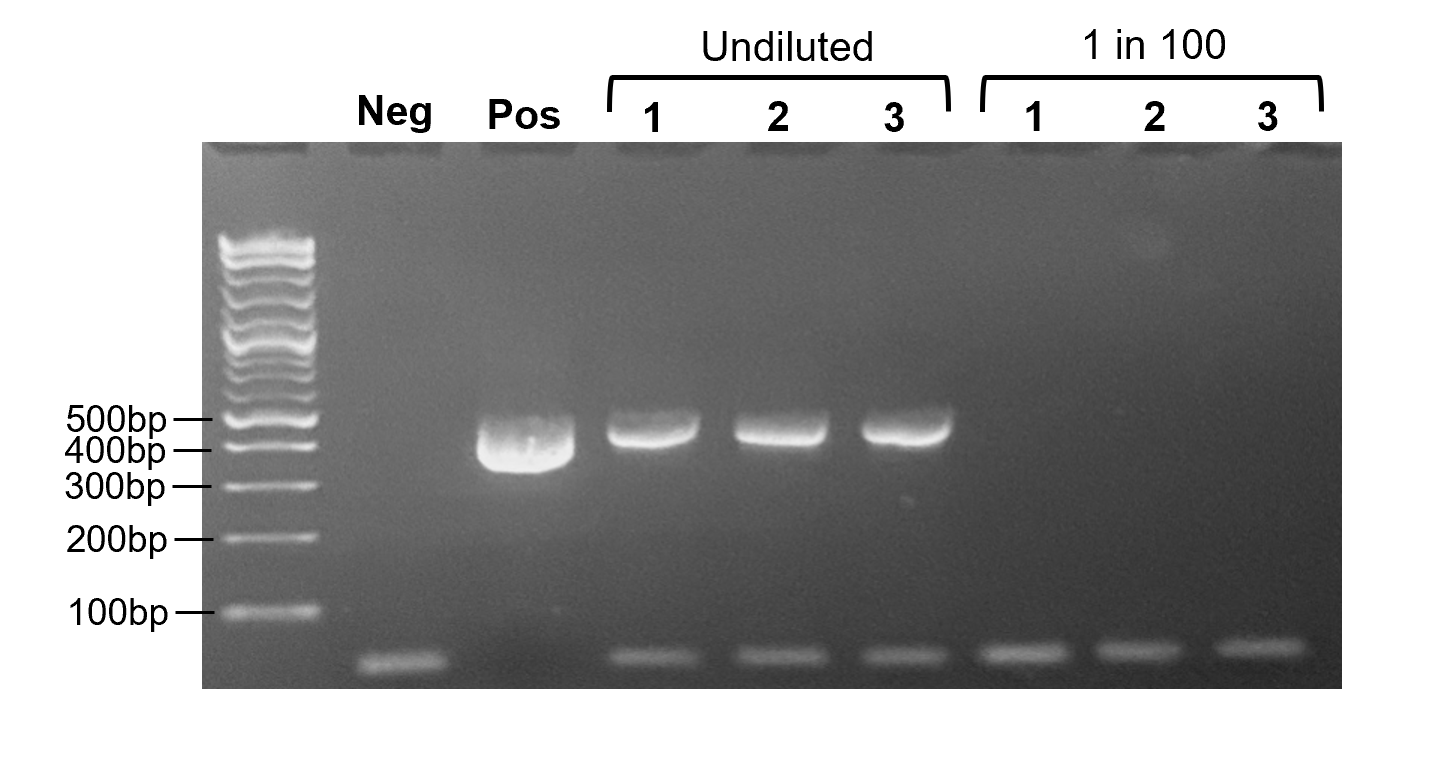
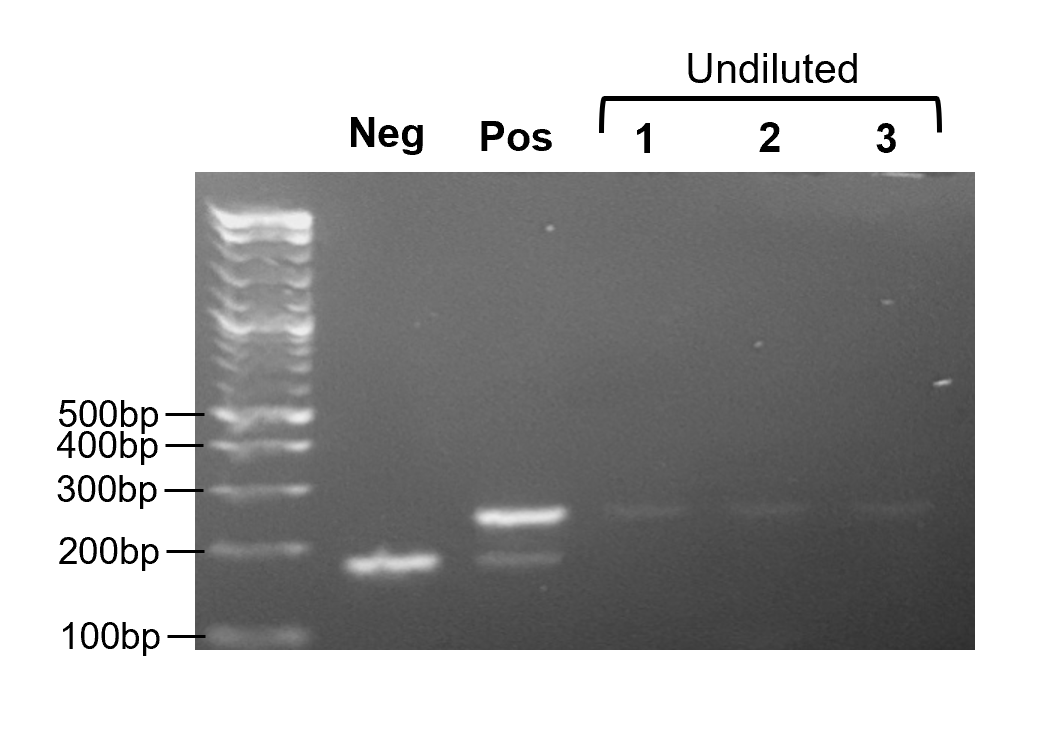
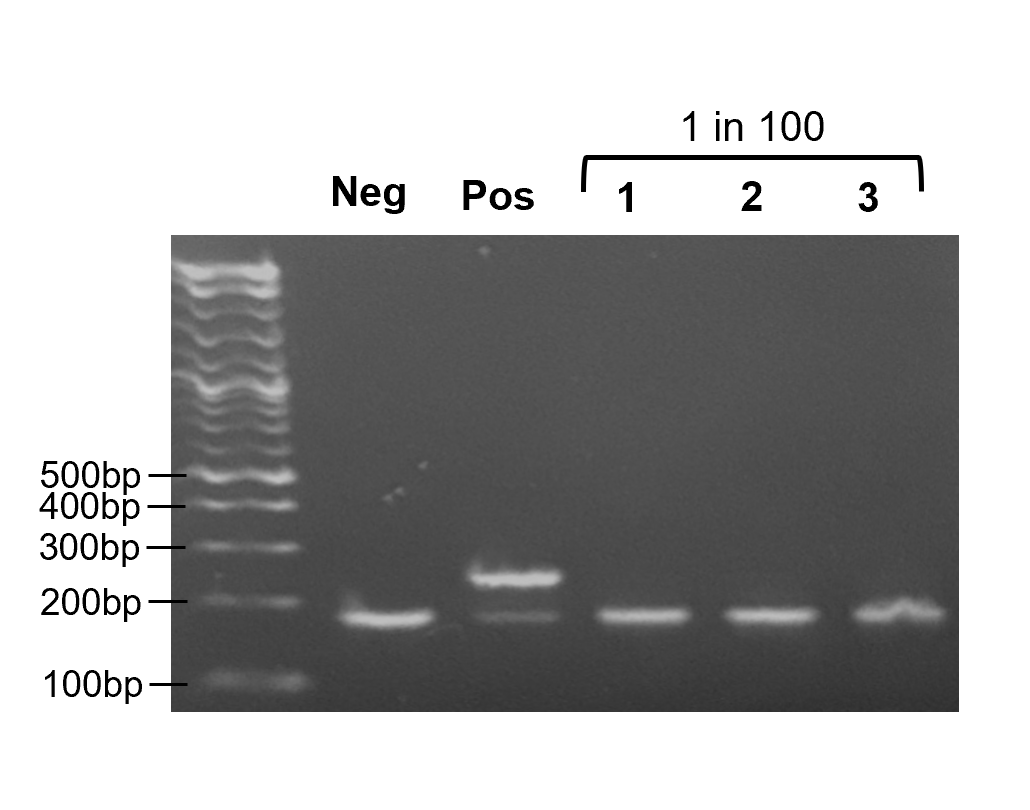
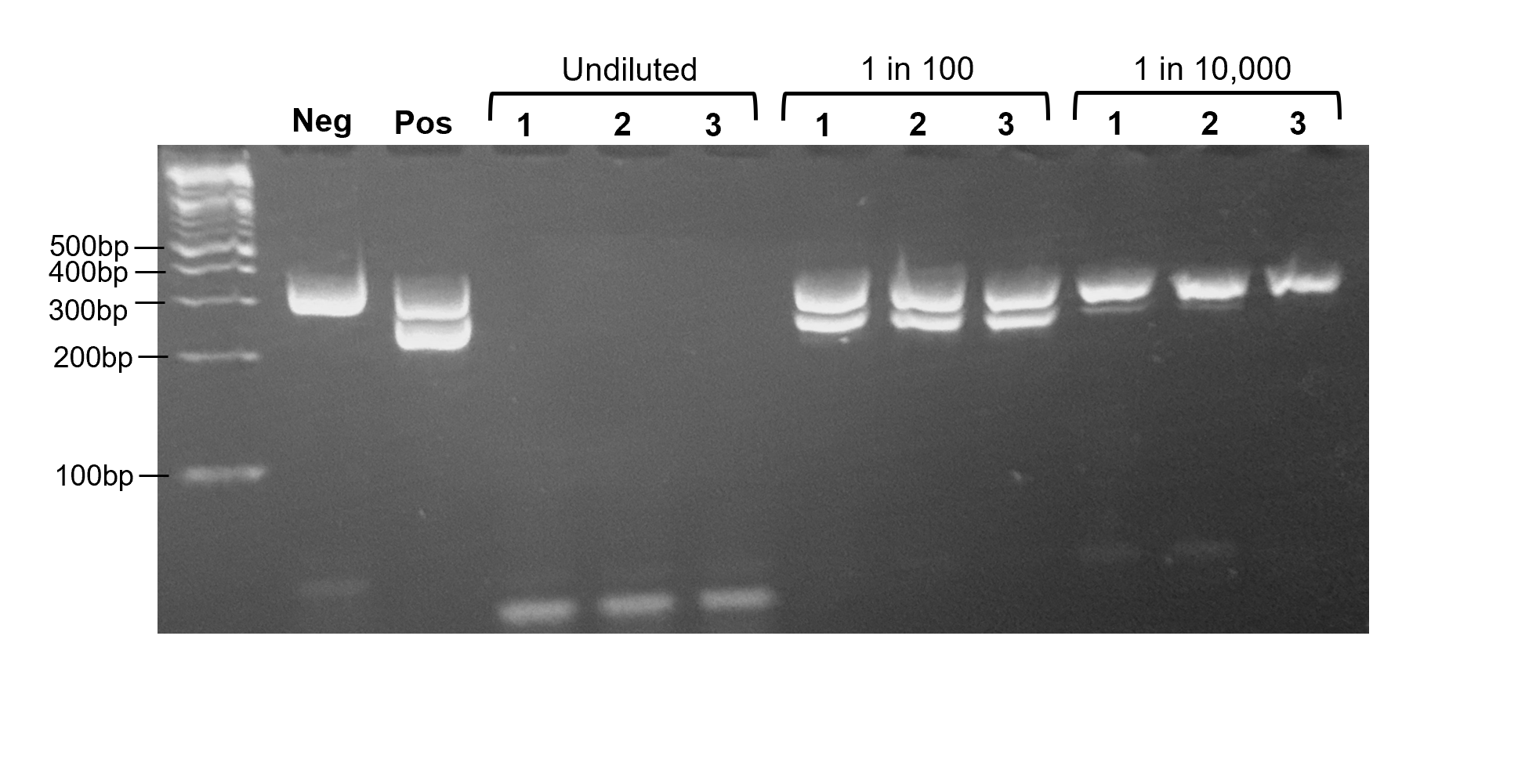
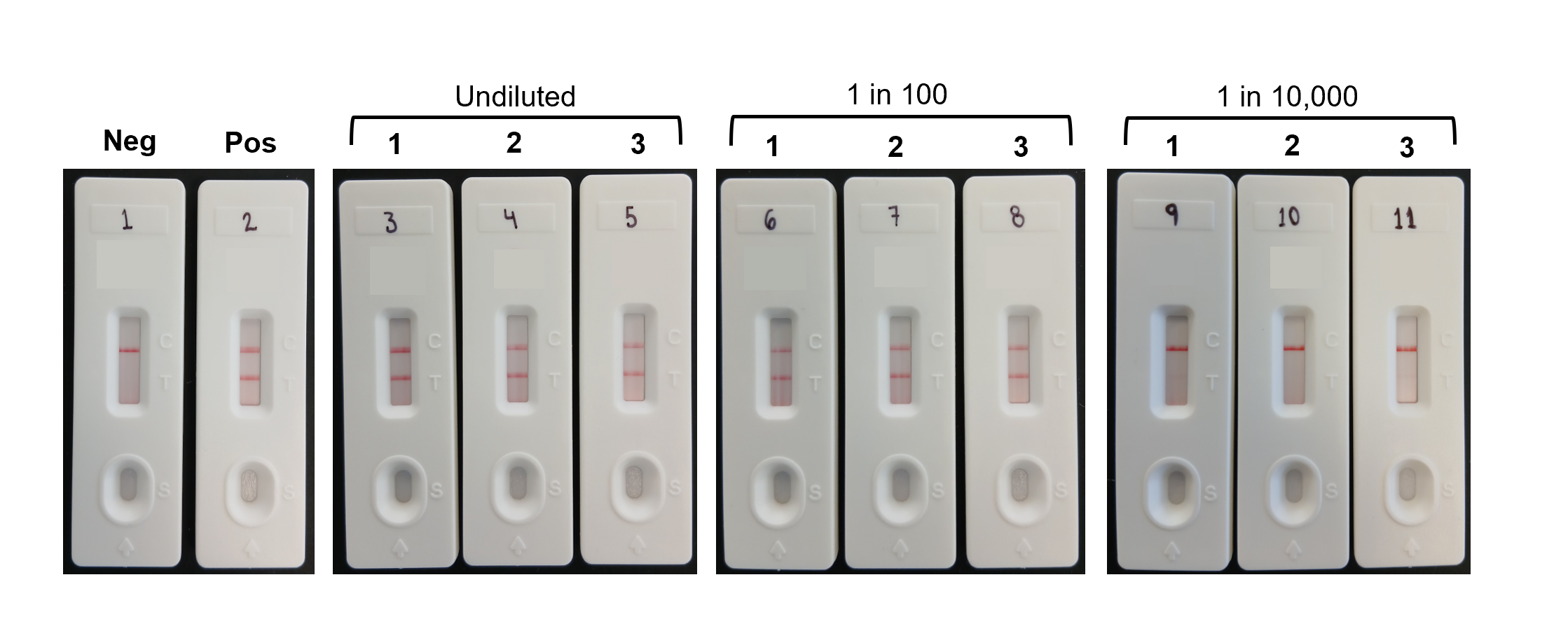
To evaluate each test against a genuinely contaminated cell culture sample, a positive supernatant was obtained from the Cell Science Team at The Francis Crick Institute. The confirmed Mycoplasma-positive Ishikawa (ISK) cell line was grown by standard procedures in RPMI media (+ 10% FCS) for five days before harvesting. The undiluted sample, together with a dilution series prepared in fresh media, was tested on each of the five tests under evaluation (Table 3). Flip Mycoplasma was the most sensitive test, detecting the contaminating Mycoplasma in the 1-in-100,000 dilution, a detection limit 103-fold to 105-fold lower than the other tests. Photographs of the raw data are presented in the Appendix.
Table 3 — Mycoplasma positive ISK Cell Culture Supernatant Sample
| Dilution Tested | PCR Kit A | PCR Kit B | PCR Kit C | Isothermal LF test | Flip Mycoplasma (Fuse Diagnostics) |
|---|---|---|---|---|---|
| Undiluted | 100% (3/3) | 100% (3/3) | INVALID | 100% (3/3) | 100% (3/3) |
| 1 in 100 | 0% (0/3) | 0% (0/3) | 100% (3/3) | 100% (3/3) | 100% (3/3) |
| 1 in 10,000 | - | - | 67% (2/3) | 67% (2/3) | 100% (3/3) |
| 1 in 100,000 | - | - | - | - | 100% (3/3) |
| 1 in 1,000,000 | - | - | - | - | 33% (1/3) |
PCR Kit C returned an INVALID result for the undiluted supernatant, presumably owing to inhibitors in the sample, since the 1/100 dilution gave a positive result. This test differs from the others in concentrating a 1 mL supernatant sample 20-fold (to 50 µL) before use. While this can offer a theoretical sensitivity benefit, it also makes the assay more vulnerable to invalid results where PCR inhibitors are present, a practical trade-off worth noting for routine screening.
Combining Sensitivity and Convenience – Why It Matters in Practice
Sensitivity is critical because it determines how readily a contamination can be identified. As outlined in a separate recent article, PCR tests have largely displaced legacy biochemical methods such as MycoAlert® (Lonza) and to become the go-to method for Mycoplasma screening in the research laboratory. This is mainly due to their improved sensitivity which permits detection of contamination within 2-4 days rather than up to 14 days (Kazemiha et al 2014; Thacker et al 2023).
Clearly not all PCR tests are the same as starkly demonstrated by this study. The PCR kits evaluated in this study are targeted at routine screening applications in the research laboratory and therefore omit target extraction used in Pharmacopoeia-compliant PCR tests, presumably to improve their speed and convenience and reduce their cost for the research laboratory setting. However, this putative benefit may have come at the cost of their performance, with sensitivity and reliability of many research use PCR tests clearly falling below the required level.
Given the diversity of different Mycoplasma species, cell lines and growth media employed in cell culture, the growth rate of Mycoplasma contaminated cultures is highly variable and it can take many days for cultures to reach the high titres required for poor sensitivity tests. As a result, low-level contamination can persist and spread long before it is noticed. A test that only registers a positive at high titres leaves this window open. The contamination continues undetected, corrupting results and, in the worst case, persisting in cell banks, and repeatedly spreading to other cell lines and cultures. Reliably detecting contamination at 1–10 CFU per mL, as Flip Mycoplasma does, closes much of that blind spot. It is also what gives confidence that a culture is genuinely clean after an attempted decontamination, rather than merely suppressed below the threshold of a less sensitive test.
Real-world usage relies on how often a test can realistically be performed. A convenient and rapid test is essential to drive adoption and increase test frequency in a busy research lab.
What has been missing until now is a new test which has the sensitivity of a Pharmacopoeia-compliant PCR test and which meets or exceeds the speed and convenience of the legacy biochemical tests. Whilst the first generation of isothermal LF tests, including the test evaluated in this study, have reduced test times compared to PCR, neither their sensitivity nor their speed are sufficient to drive the change needed to fully meet the needs of cell culture users. This is where Flip Mycoplasma comes in. Because it is both highly sensitive and fast and simple to run, it can be used frequently, on small samples, as an in-process check at the bench. Each test takes around 12 to 15 minutes and needs only a simple heat block and a visual strip read-out, with no thermocycling, gel or dedicated molecular facility. It therefore pairs 10 CFU per mL sensitivity with a format built for routine cell-culture screening in any location, so users no longer have to trade sensitivity for convenience.
Discussion and Conclusions
This study demonstrates that Flip Mycoplasma is significantly more sensitive than the four other commercially available research-use Mycoplasma tests evaluated, comprising three PCR-based kits and an isothermal/lateral-flow test, across both quantified standards and a contaminated supernatant. This allows a screen to catch the low-level contaminations that matter in practice, including slow-growing species and cultures sampled at low confluence, that less sensitive tests can miss. No false positives were observed with any of the tests evaluated, confirming specific amplification of the target.
The sensitivity of Flip Mycoplasma is achieved without the supernatant-concentration step required by PCR Kit C and the isothermal/lateral-flow test. It stems in part from Flip Mycoplasma's direct targeting of ribosomal RNA, of which there are thousands of copies in each Mycoplasma cell. Targeting RNA also reduces the risk of false positives from residual DNA left by earlier contaminations, because RNA is comparatively unstable and therefore its presence corresponds more closely to the presence of viable cells.
Crucially, this high level of sensitivity comes with the simplest workflow of the tests compared. Each Flip Mycoplasma test takes under 15 minutes, against 1–4 hours for the others; it is supplied in a unitised format that minimises sample preparation; and it is read on a simple visual test strip, removing the agarose-gel analysis the PCR tests require. All of the test components for Flip Mycoplasma can also be stored in ambient conditions, with a shelf life of 12 months, in contrast to the freezer storage and cold-chain required by other kits. Together, these properties make Flip Mycoplasma exceptionally well suited to frequent, routine screening. It offers best-in-class sensitivity, and yet is fast and simple enough to be used as often as good cell-culture practice demands and without the need to set up complex equipment and protocols. This gives users more time to focus on value-adding activity, and less time on this critical but repetitive task.
Product Information
Flip Mycoplasma is available from Fuse Diagnostics and selected distributor partners in sizes of 10 Tests, 50 Tests and 100 Tests. Contact Fuse on info@fuse-dx.com if you wish to request a free 10-test evaluation kit or a quotation.
| Product | Code |
|---|---|
| Flip Mycoplasma test kit (10 tests) | FPR003-0013-10 |
| Flip Mycoplasma test kit (50 tests, 5 kits) | FPR003-0013-50 |
| Flip Mycoplasma test kit (100 tests, 10 kits) | FPR003-0013-100 |
| Flip Mycoplasma external positive control | FPR003-0045 |
Evaluate Flip Mycoplasma in your laboratory. Fuse Diagnostics supplies free evaluation kits to research groups. The full analytical performance summary is available on the Flip Mycoplasma product page, contact us at info@fuse-dx.com if you would like further information or to request a quote.
References
Drexler HG, Uphoff CC (2002). Mycoplasma contamination of cell cultures: incidence, sources, effects, detection, elimination, prevention. Cytotechnology 39(2):75–90.
Olarerin-George AO, Hogenesch JB (2015). Assessing the prevalence of mycoplasma contamination in cell culture via a survey of NCBI's RNA-seq archive. Nucleic Acids Research 43(5):2535–2542.
Molla Kazemiha, V., Amanzadeh, A., Memarnejadian, A. et al. Sensitivity of biochemical test in comparison with other methods for the detection of mycoplasma contamination in human and animal cell lines stored in the National Cell Bank of Iran. Cytotechnology 66, 861–873 (2014).
Thacker S, Kelsey S, Sharma, A and Schwartz C (2023) Simple and Effective Routine Mycoplasma Testing with MycoAlert® Biochemical Assays. Lonza CD-SP096 09/23.
Appendix: Raw Data from the Positive Sample
PCR Kit A
PCR Kit B
PCR Kit C
Isothermal Amplification Test with Lateral-Flow Strip Readout
Flip Mycoplasma